Rarely Seen Stieff items


Rarely Seen Stieff items

In 1892 when Charles C. Stieff started the company that would become
The Stieff Company, High Victorian fashion was at it’s zenith. The Victorian table had a utensil for every purpose. Ones hands were never to touch the food at any time. This was never any truer than in the Victorian households that used Sterling Silver at the table. This fashion gave us a lot of delightful pieces that today seem quaint and sometimes silly like Grape Scissors, Tomato and Bacon Servers. Over the years as fashions changed those odd ball items fell from grace and have greatly disappeared. When found today, many of them can be quite expensive to purchase.
In no particular order, Here are some pieces from The House of Stieff ...
that are not seen on a regular basis
Pre-Stieff Custom Salad Set
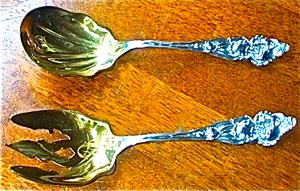
Made by Balt. Sterling Silver Co.
To see more photos of this set click on link below
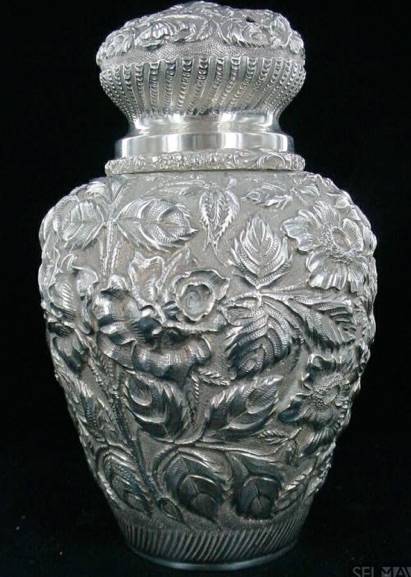
Sugar Sifter
Now commonly known as Muffineers
Holds powdered sugar to sprinkle on your muffins!
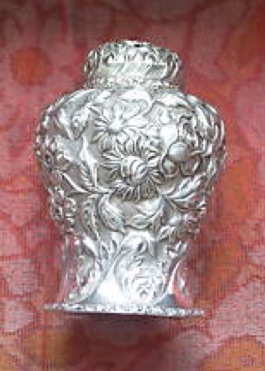
Above #185, 4 inches Below #187 6 inches
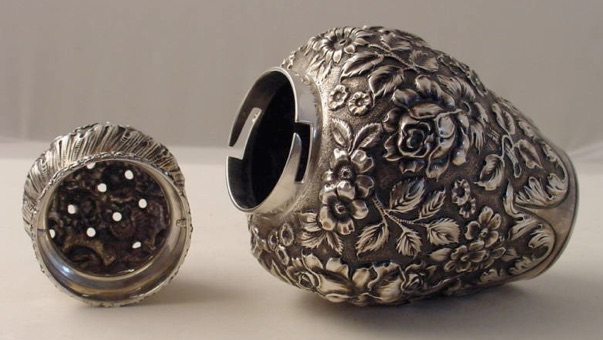
Muffineer open shows the locking device to keep the lid from falling off during use.
Men’s Shaving Mug #450
Sterling, nouveau style with florals and “twig” handle
This example is from 1916
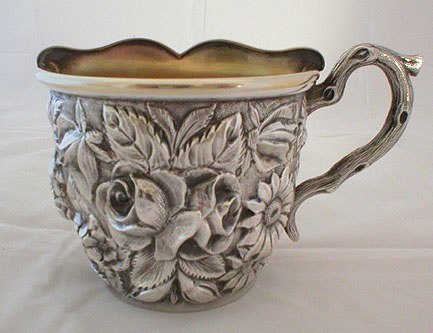
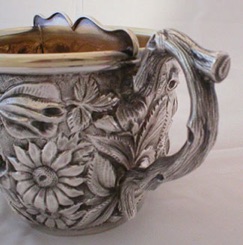


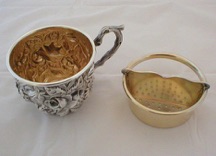
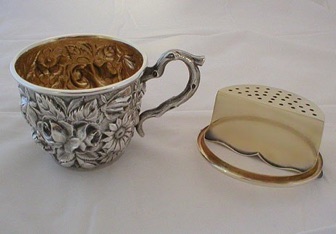
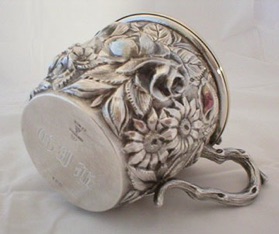
Stieff Sterling Silver Repousse Mustache Cup. This measures 5" across top and sits 3 1/8" tall. Gilt interior. Marked on base: "STIEFF" S in Crown "STERLING" 16 in circle "450." The removable piece is marked: "STERLING." Monogrammed on the base with three initials weighs 8.4 ounces.
Once, Stieff made Parasols & Umbrellas
Several styles are shown below
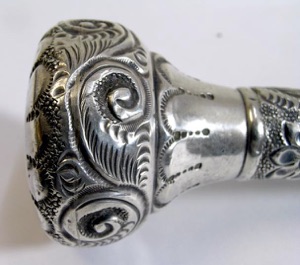
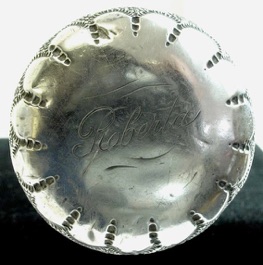
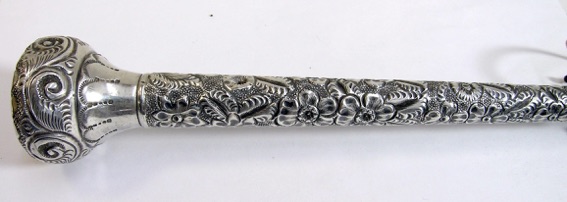
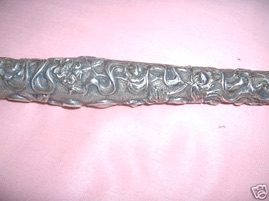
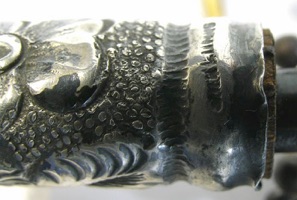

Baltimore was the home of several famous umbrella and walking stick makers. Stieff would make the handle and was happy to deliver it to the maker of your choice to be added to an umbrella or walking stick.
Many more photos of Canes and Umbrellas are just a click away at: Additional Canes and Umbrellas
including some fantastic custom work.
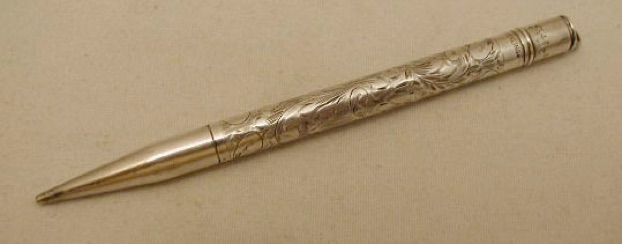
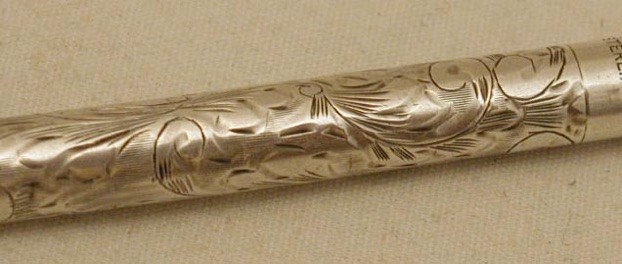
The small ring on the top denotes that this is a ladies pen. The star is the 1930 mark
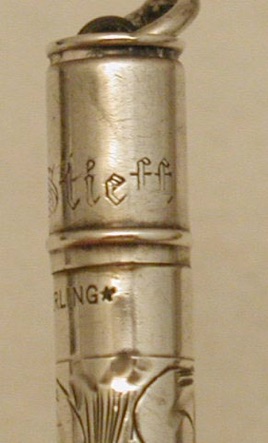
(photo from ebay)
Bonnet Brush
W/ long bristles

(photo ebay)
Often confused as a clothes brush, but these were used to clean ladies bonnets.
Rare to find one with intact long bristles still in the brush.
More common clothes brushes as seen below were more rectangular, some with rounded edges.
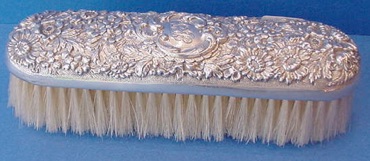
This photo, imperialhalfbushel.com
#23 Relish Fork (5 tines)
For those larger pickled items that the pickle fork can not handle.
Sometimes incorrectly called a Sardine Fork or a Pastry Fork
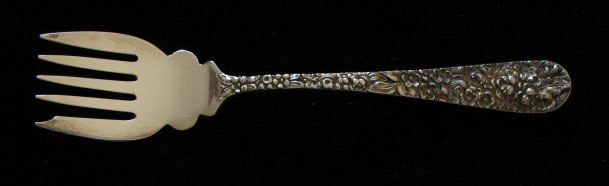
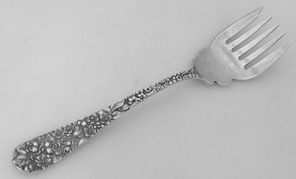
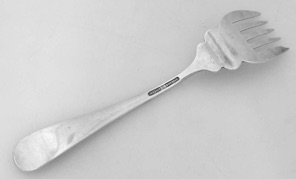
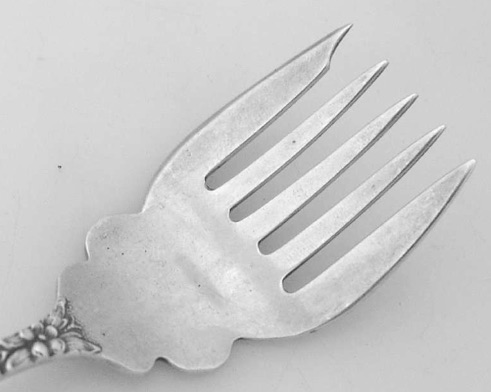
Appears in the late 1920’s catalog, but not in the 1937, a casualty of changing table fashions.
Ice Tongs w FLAT side
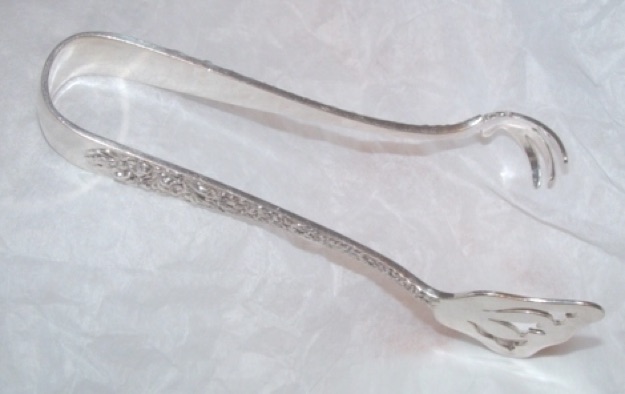
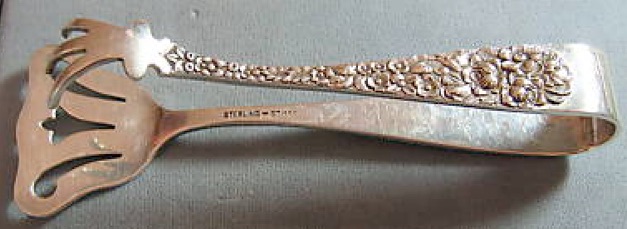
Shown above in the Rose pattern and below in Corsage
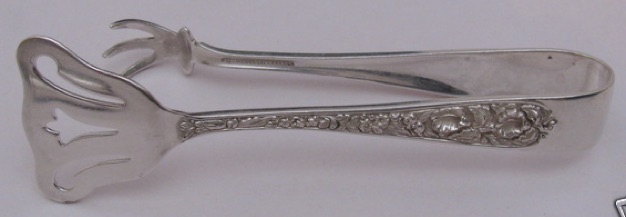
In years past most ice was chopped or “picked” off large blocks of ice. The flat side of the ice tongs would be more practical back then to pick up odd sized pieces of Ice. Today’s more uniform sized cubes just need the two claw style.
To see other types of tongs, click on photo below
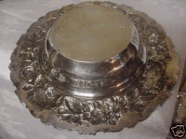
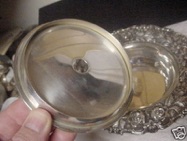
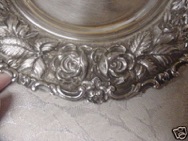
#0600, a 7 Inch Butter Dish from 1949 (Two pieces)
Ice goes in the deep well of the bottom piece to keep the butter above cold

This is a 1920 Coffee & Tea set with the rare tray. Most people did not order the tray and they are very rare today. This set appears to have been “over cleaned” by someone. Most of the patina is gone, but it can be restored.
(For patina restoration, please see the section on this site called OUCH! Silver Restoration)
Anything with the 1928 date mark
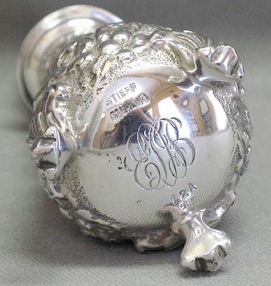
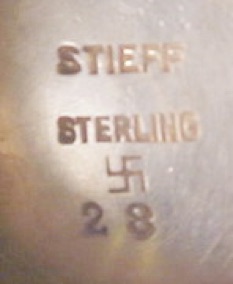
Above from a #28 coffee pot, the 28 not denoting the year

The 1928 mark is a Swastika. You rarely see any pieces from 1928. Here it is found below the 12A and just above the leg. As mentioned elsewhere in this site, this has no nazi meanings at all.
Perhaps during WWII people destroyed the swastika marks to avoid conflict or because they
did not know it was a date mark. This is just conjecture on my part.
(This piece from my personal collection)
Larger Hollow Ware
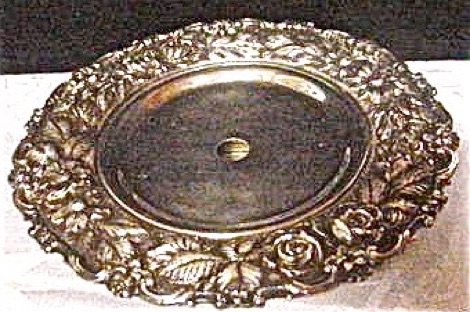
Smaller pieces like this bon bon dish are fairly common. Larger pieces like coffee services, candlesticks, vases and trays are much rarer. In 1979 and again in 2010 when silver prices jumped to almost 50 dollar a troy ounce.. many of these larger pieces were sold for scrap. This makes those left today more rare.
Unfortunately, Rarity does not really add to the value as many people today do not want to have to polish silver, most do not entertain as people do in the past or just have no interest in the pieces. So demand is down greatly for these pieces and the values of many have declined over the years.
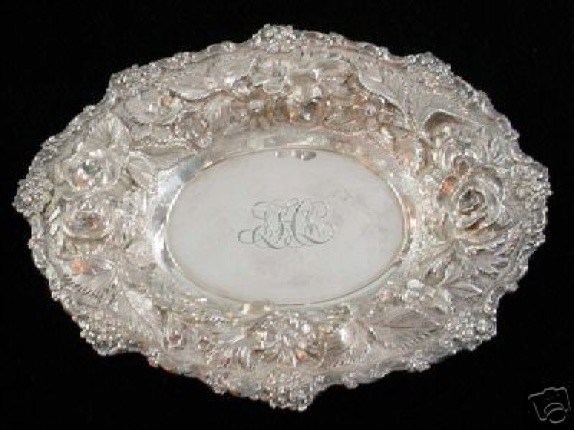
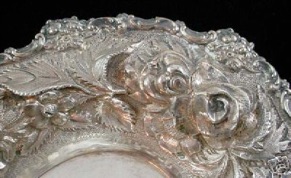
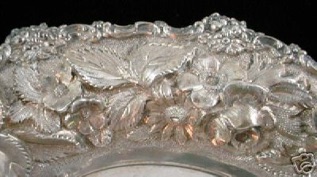
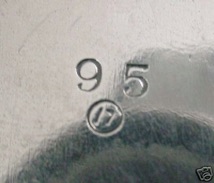
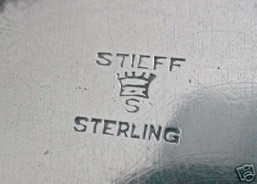
Hand Chased 1917 Oval Bon Bon Dish, 7.25 inches long
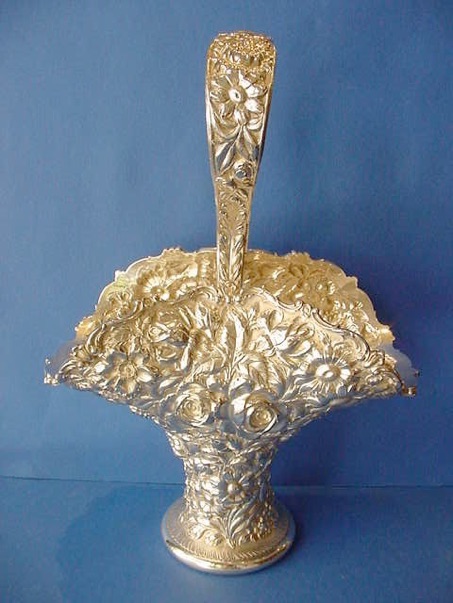
This is a 1922 “Flower or Fruit Basket” w/ fixed handled

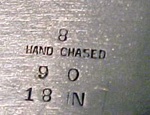
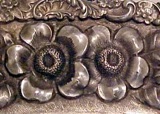
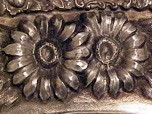
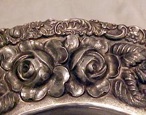
An example of a #90, 18 inch Meat Platter from 1949
Anything in the Victoria Pattern
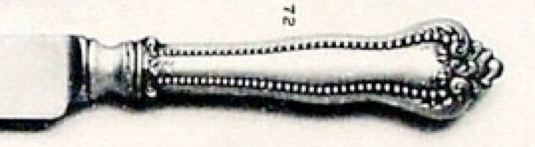
The Victoria Pattern is very very rare.
Victoria dates from 1897-1919
If you have photos of Victoria, please send them to me so that I can
share them with others. I have several pieces in my personal collection.
Original Wooden Cases
At one time Stieff Silver could be ordered in custom wooden cases lined in silk. On page 24 of the 1910 Catalog item # 93 is “flatware in Silk Covered Case”
Here is an example of that case.
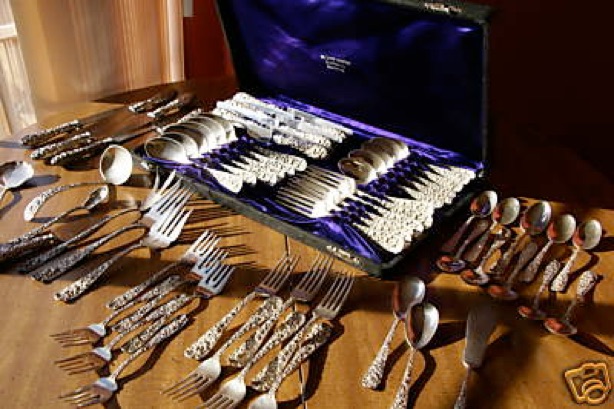
Even a hundred years later, look how vibrant the color of the silk is.
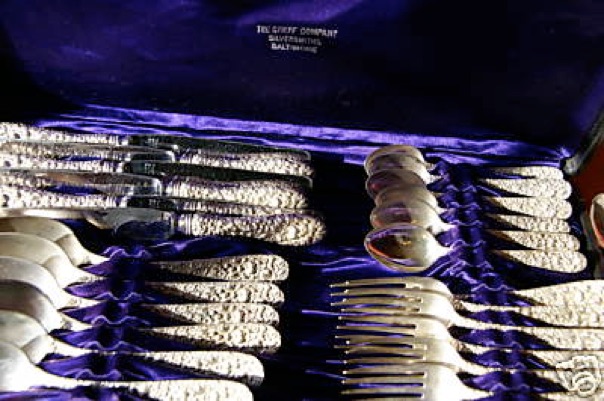
This photo shows more than the contents that fit in the case.
(from ebay)
Additional examples of Stieff boxed goods can be see at:
The War Years 1942-1945
The salt shaker below shows the H mark for 1943
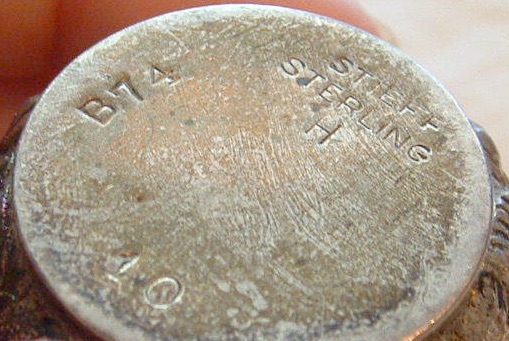
This is not the H used for Heavy as seen on flatware.
During WWII, the silver supply was controlled by the government. When stockpiles of silver ran out, production stopped. Very few items were made after 1942.
The 1943 H mark below is on a Forget-Me-Not baby cup
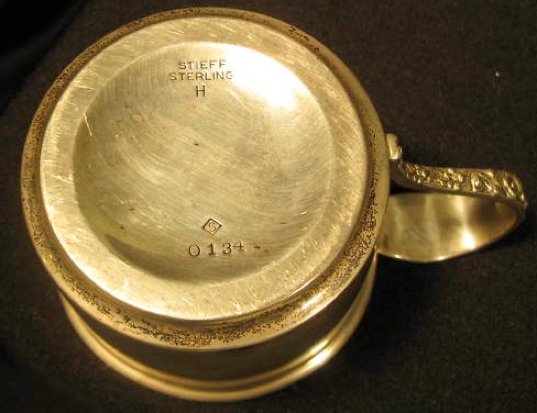
The J was the mark for 1944.
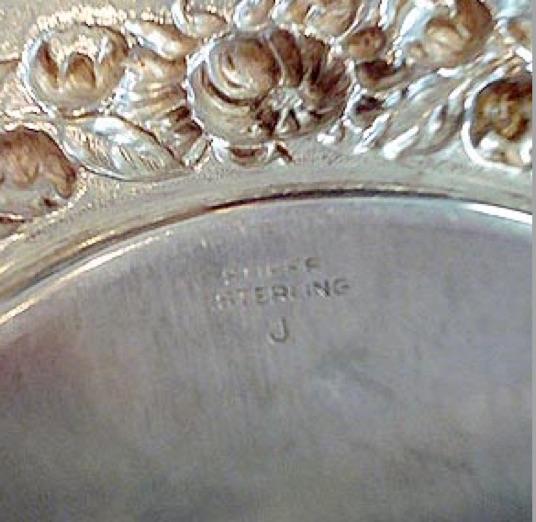
This is from a set of 8 Bread Plates made in 1944.
Sterling Silver flatware with
Gold Vermeil
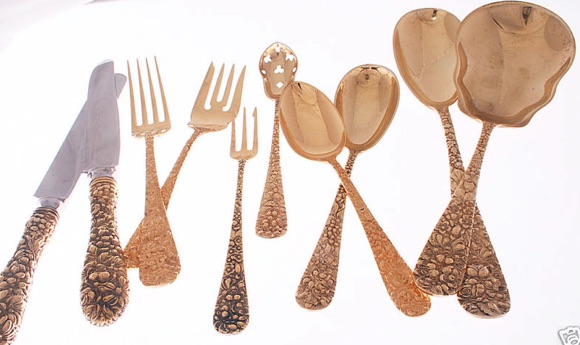
I do not know how much of this product was produced. It had to be expensive. This is just a part of the set.
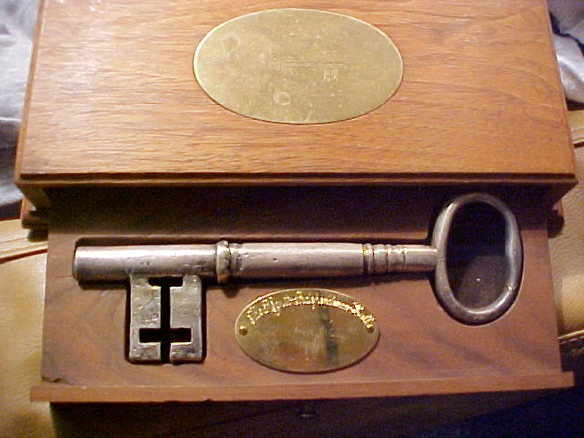
1987 “Key to Independence Hall”
To see both Sterling and Pewter versions of this key, click below.
Shoe Horns
Easily lost over the years
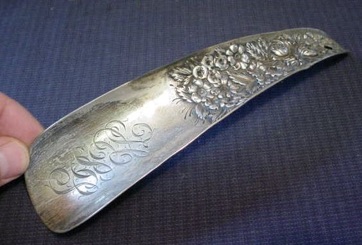
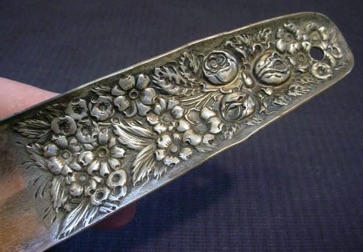
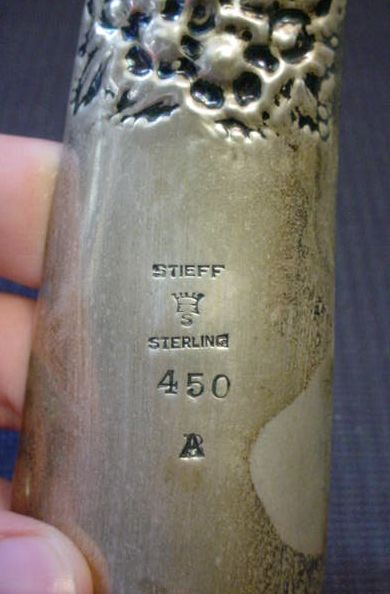
This piece confuses me. The A stamp for 1936 seems to be over top of what looks like a 2, which does not make sense. Also the Stieff crown was not used on pieces after 1929. Perhaps this was something that in stock in the factory for years, and was later stamped with the A to make it match other pieces that had been ordered in 1936.
(photos from ebay)
WWII era pieces.
During WWII, Stieff produced a lot of war materials and silver production was greatly reduced. It is rare to find items made during the war.
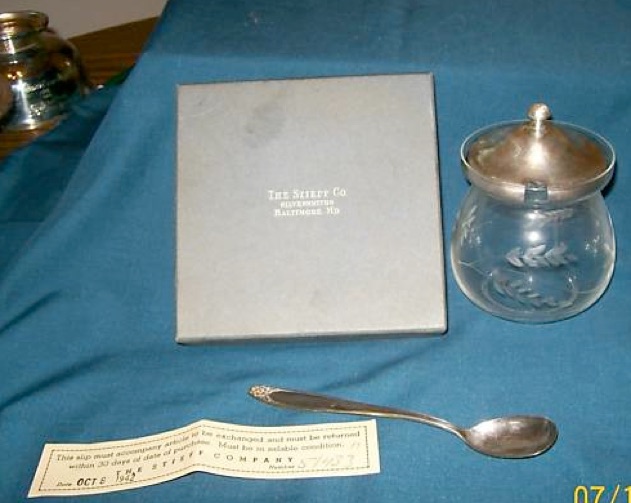
This piece still has it’s original documentation dated October 8, 1942
(from my personal collection)
Religious Objects
The Dinneen Chalice 1936
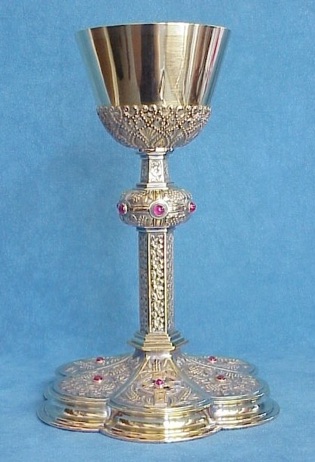
A One of a Kind Masterpiece
Click on photo for more info
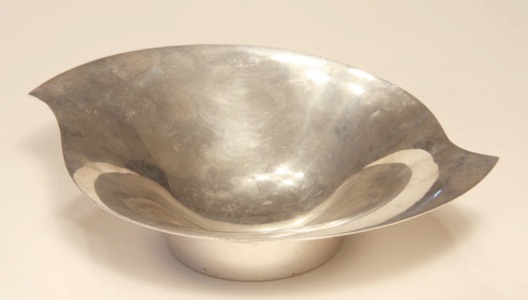
George Jensen style bowl
Marked STERLING STIEFF X
(1956)
Click below for
More Spectacular and rare Stieff Silver
This site, THESTIEFFCOMPANY.COM receives no money or compensation from any of the references or companies listed on this site. We wish to thank others for the use of material from their sites and it is published here as an educational tool only. Some images have come from unknown original sources. If I have used your image without credit or if it needs to be removed, please contact me. We encourage visitors to venture to the other sites shown on this one to learn more about silver and view the images of craftsmanship that they share with all of us. Ad revenues from the google ads helps me maintain this site for the use by silver collectors and those who are just “wondering” about their grandmothers silver and what’s what in the silver chest. I do not make a profit from the publication of this site, it is for educational purposes only.
Individual Butter Spreaders (short)
in the CHRYSANTHEMUM pattern
Spreaders once came in long and a “short” size.

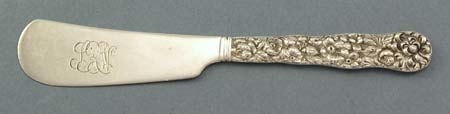
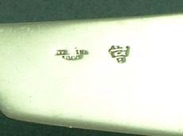
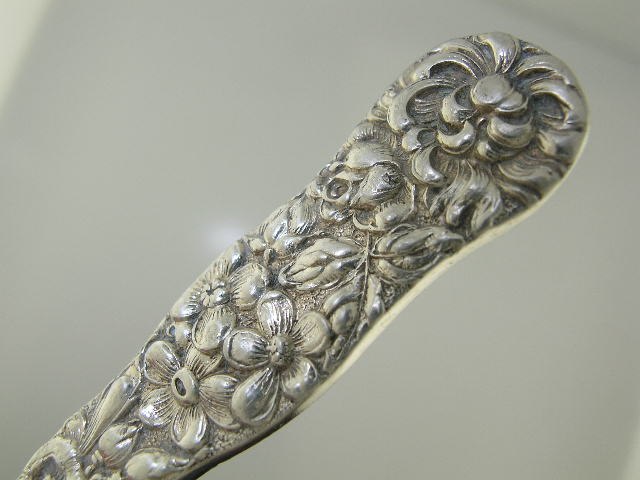
Shown in the Chrysanthemum pattern
Plaques
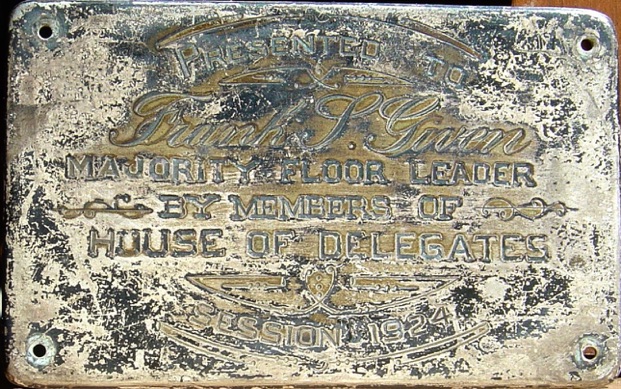
Presented to Frank S. Given
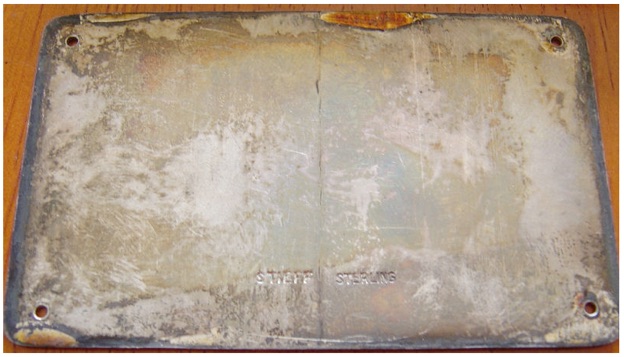
Reverse: STIEFF STERLING Size is 2 x 3.5
I do not know what the plaque was attached to.
